ONOZU — LOS ANGELES
The Hills After Winter Rain
Winter rain briefly redraws the dry hills with green slopes, dark soil and newly visible drainage lines.
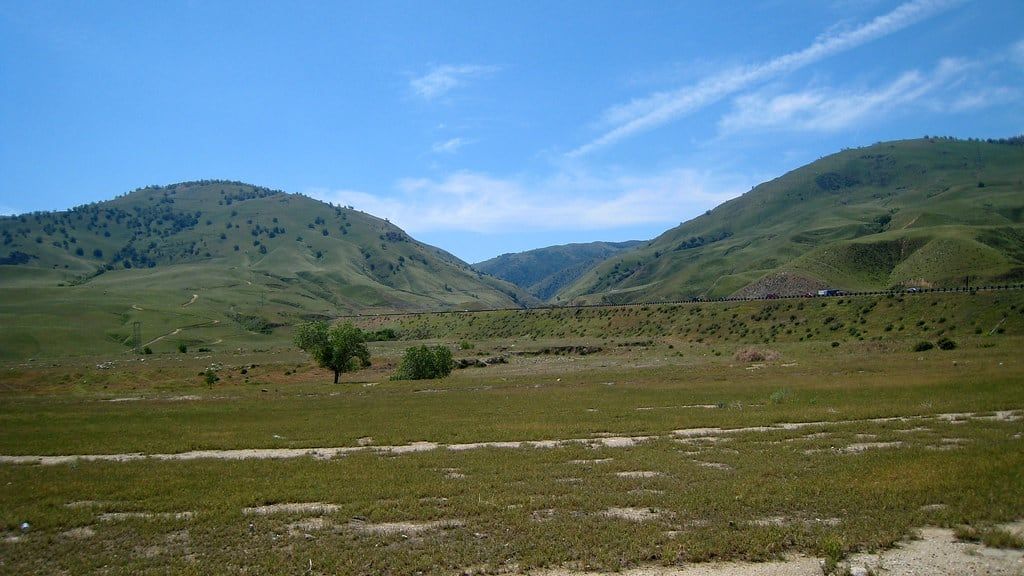
California Hills by JoshBerglund19. Source, licensed under CC BY 2.0. Auto-oriented, resized, metadata stripped, and recompressed; responsive AVIF/WebP derivatives are generated at build time.
After winter rain, the hills around Los Angeles appear newly articulated. Slopes that looked uniformly tan in late summer divide into many surfaces: bright grass on open ground, dark chaparral along folds, exposed soil beside paths, and pale stone where water has cleared away dust. Even from a distance, drainage lines become visible as branching marks.
The transformation begins with colour, but it is also a change in texture. Dry stems bend under drops. Fine grass covers ground that had seemed bare. Soil along a trail becomes soft enough to hold the prints of shoes, birds, and small animals. At the base of a slope, water gathers briefly in shallow depressions before sinking or continuing toward the street.
Water finding old routes
Rain does not move evenly across a hill. It follows small channels shaped by earlier storms, roots, stones, and the gradient of the land. Some channels are no wider than a hand. Others form narrow gullies edged with leaves and broken twigs. Their curves reveal how much structure was present beneath the summer dust.
Where a path crosses one of these routes, the difference is clear. Compacted ground sheds water quickly, while grass and leaf litter slow it. A dark ribbon may run along the path until it reaches a crack or lower edge. By the next day the moving water is often gone, but a line of silt remains.
Cloud shadow makes the wet landscape change from minute to minute. A green slope brightens, then becomes subdued as a larger cloud moves inland. Openings in the cloud send narrow patches of light across the ridges. The effect is quiet but expansive: distance is restored in layers rather than in the flat glare of a clear summer afternoon.
A season with limits
The green period is temporary. Warmer days lengthen, surface moisture diminishes, and annual plants begin to lose their brightness. South-facing ground usually dries first. Protected folds hold colour longer, especially where shade limits evaporation.
This brevity is part of the winter landscape rather than a flaw in it. Rain does not remake the hills permanently. It reveals dormant patterns, supports a short rise of green, and leaves a record in channels and softened soil. The dry season will return, but for a few weeks the slopes show how closely their visible form is tied to water.